
How Berkeley and its Alumni are Embracing AI
This article first appeared in the 2024-2025 edition of Berkeley magazine as “Decoding the Future.”
–
“In a world where we have the leading medical research in an artificial intelligence model, could we cure breast cancer and diagnose it early? I think that is where AI can really help shape the world.”
This is just one of many possibilities Sam Bobo ’10 posed to Berkeley Preparatory School students when he visited campus in March and spoke about the power of AI. Sam has spent his career working with world-famous tools, from IBM’s Watson computer system to Dragon speech recognition software. Now he’s a product manager at Microsoft, building up its contact center voice bots and leading innovation in AI. He also writes about AI every week in his blog, Speaking Artificially.
Sam says he began writing regularly once ChatGPT launched in 2022—an event that introduced millions of people to the concept of generative artificial intelligence (GenAI), a type of AI that uses data to learn and subsequently create original content, like writing and images. Because of its capacity to change how we approach everyday life, experts have compared GenAI to transformative innovations like broadband internet and the spread of smartphones.
Now, just a few years into this paradigm shift, Berkeley is meeting the AI moment head-on, with both our on-campus community and our impressive alumni leveraging this technology in exciting ways.
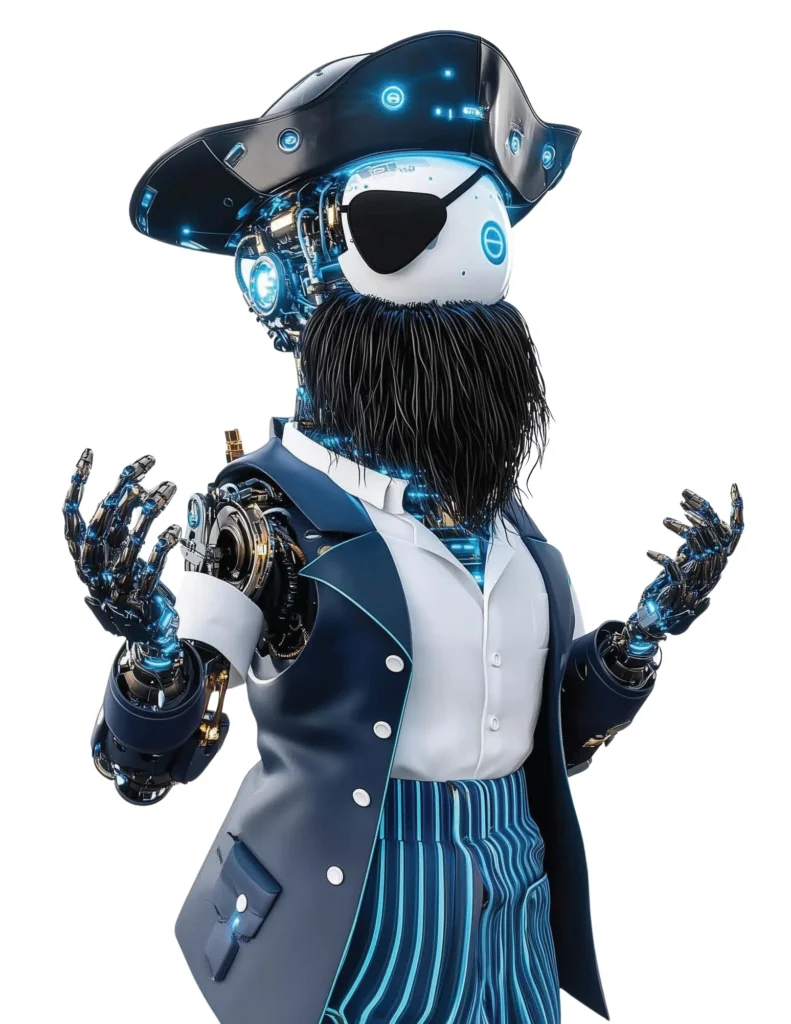
This rendering of Bucky was created with Midjourney, an AI tool that generates images.
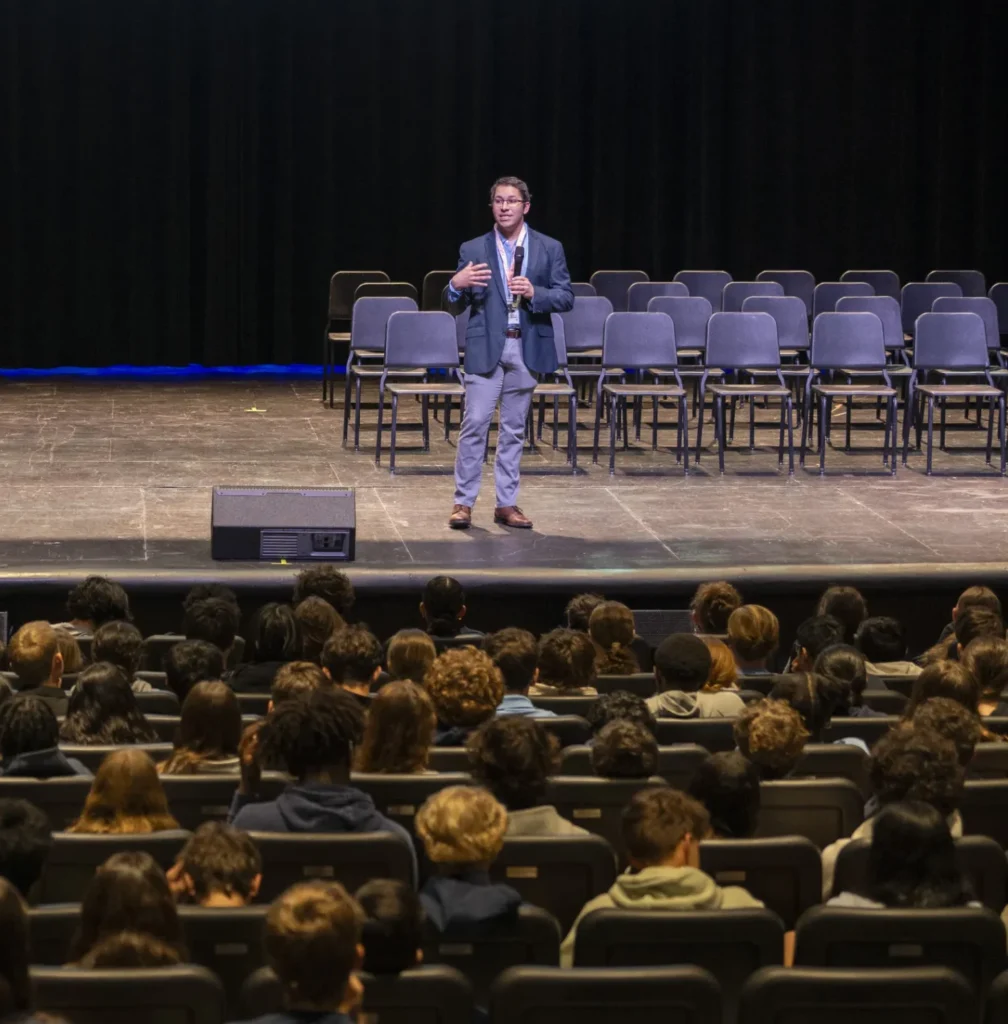
Sam Bobo ’10 speaks to a group of Middle Division students at Berkeley.
For his part, Sam says he’s not surprised that Berkeley is already integrating AI into campus life: “I was a Lifer, and it’s really a point of pride that my alma mater is focusing on this and trying to accelerate.”
During his visit to Berkeley, Sam spoke to students at Middle Division convocation and in Upper Division computer science classes, telling the students that AI excels when it’s applied to very specific tasks. That’s because it’s ultimately a tool—or, in Sam’s words, “it’s a probability and statistics machine.” He said, “Language learning models [like ChatGPT] effectively are like a scatterplot but in a billion dimensions. When you prompt it, it’s trying to navigate its data set to find this subsection of its knowledge.” Because of this, he feels creating more open-source AI tools with highly specific purposes is necessary, since these will make searches more effective and actionable: “In my view of the world, I’d love to get to the point where we have leading institutes contributing high-quality data to build sophisticated models in niche spaces that can solve highly-complex issues at scale.”
He said Berkeley fostered a spirit of intellectual curiosity within him that he’s carried forth into the world. He encouraged students to use AI tools in their own lives and leverage them to learn new things.
Mary-Patton Davis Eisen ’06 agrees, saying she cares deeply about making sure the next generation of learners is prepared for AI. In fact, she offers three takeaways that she feels can help students understand and responsibly adopt AI. Mary-Patton is the Global Vice President of Partnerships at Glean, a tech startup whose AI platform helps workers be more productive. After getting her master’s degree in business administration from the Wharton School, Mary-Patton moved to San Francisco because she wanted to be at the forefront of innovation. She says, “When I moved out here, AI was definitely a topic, but five percent of the time. Now it’s 105 percent of the time.”
Mary-Patton says while the industry is still very new, she feels AI is not about replacing workers, but rather enhancing their productivity. When it comes to Glean, workers across industries use it in a variety of ways, from helping nurses transcribe patient appointments and auto-populate forms, to enabling banks to sort through insurance claims. She says all of these efficiencies save time and even help reduce employee burnout, but they still require a human touch: “You still need to have content and documentation, but what AI means is you don’t have to search through unstructured data to find it yourself and synthesize it. It’s a streamlining tool. It’s important to clarify that it’s not a replacement for human intelligence—it’s an enhancement. It allows you to get through work a lot faster and spend more time on broader strategic work.”
She does emphasize that AI literacy is incredibly important, especially for Berkeley students who will be entering the workforce in just a few short years. Mary-Patton says don’t be intimidated if you’re not an AI expert—because really, no one is right now, and the industry is still rapidly changing. Instead, she recommends everyone explore different AI tools, like Perplexity AI for web searches or Midjourney to create images for presentations: “The more you can be at the forefront and watch where the industry is going and what skill sets are needed around AI, the better—those are the folks that will really succeed in this transition.”
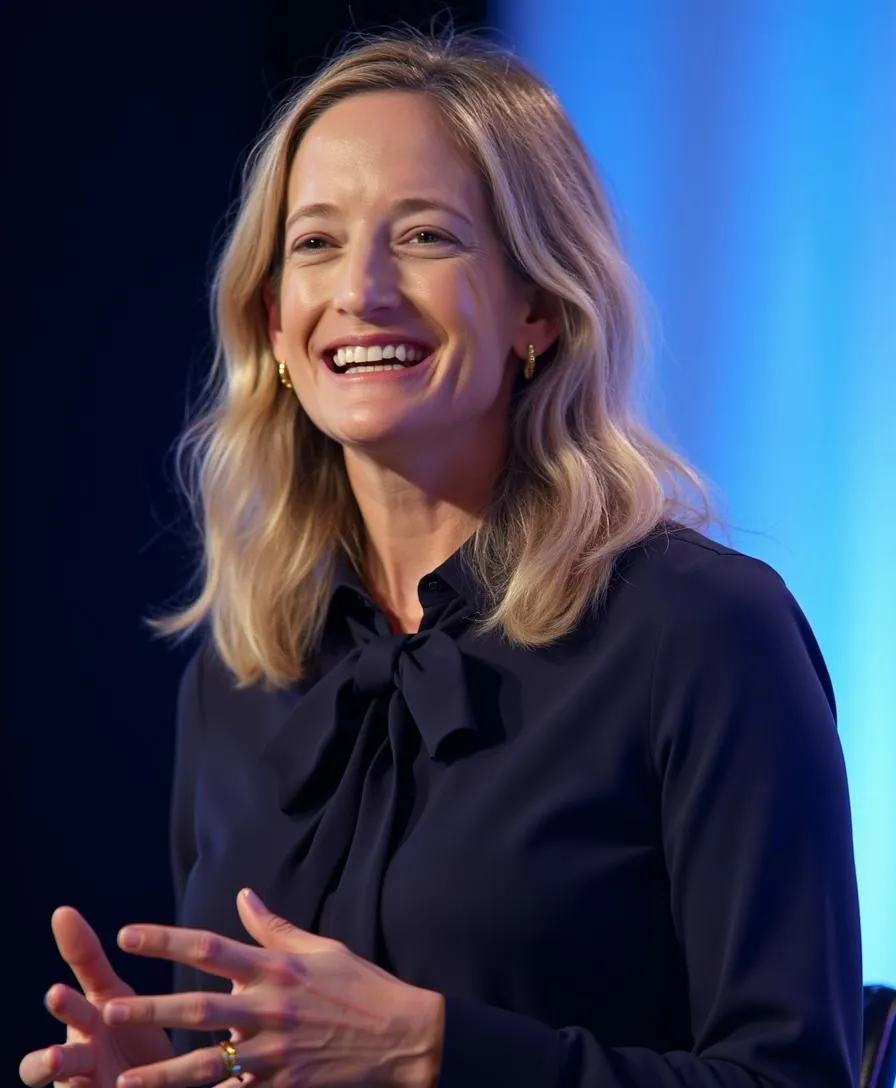
Mary-Patton Davis Eisen ’06
Integrating AI into Berkeley
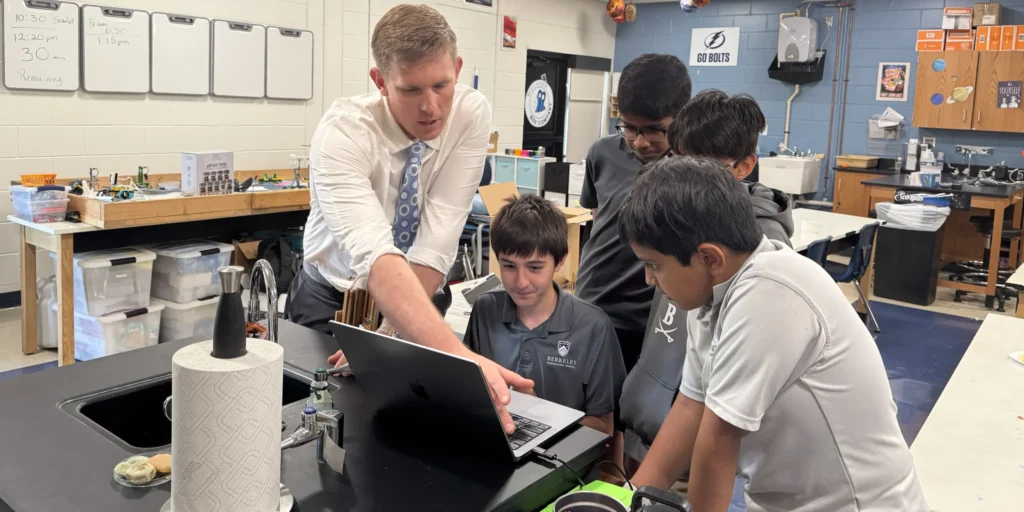
Jonathan Jordan ’08 teaches Middle Division Tech Club students how to use drone flight simulation software.
“I would say there’s more of an energy of excitement than nervousness on our campus about AI,” says Middle Division Director Cindy Boss. As such, Berkeley is exploring several ways to weave AI tools into our campus culture.
Last summer, teachers in all three divisions were required to read at least one book on AI as part of their summer reading. The titles they could choose from were:
• The AI Infused Classroom: Inspiring Ideas to Shift Teaching and Maximize Meaningful Learning in the World of AI by Holly Clark
• The AI Classroom: The Ultimate Guide to Artificial Intelligence in Education by Daniel Fitzpatrick, Amanda Fox, and Brad Weinstein
• AI for Educators: Learning Strategies, Teacher Efficiencies, and a Vision for an Artificial Intelligence Future by Matt Miller
Berkeley’s Curriculum Teaching and Learning Committee (CTLC) has been meeting throughout this past school year to draft guidelines on how both teachers and students should be using AI, in order to set clear expectations moving forward. Mrs. Boss says she feels AI is not just about working more efficiently, but about being able to create content and experiences that are meaningful for students: “AI can synthesize a lot of information quickly, which means we can make better assessments, practice problems, and activities, because it saves everything and learns.”
To see those possibilities in action, look no further than Jonathan Jordan ’08. The Middle Division Science Teacher and Grade 7 Academic Dean is already known as a leader and a problem solver across campus. He wears many hats, from his role as head beekeeper for the campus’s hives, to serving as Assistant Varsity Swim Coach, to his leadership in summer swim programs and at the Berkeley Food Pantry. So it should be no surprise that he’s also becoming a leading AI expert here on Berkeley’s campus.
For example, he built an AI tool that sends him a spreadsheet showing him which students are getting low grades or missing homework—before, he had to manually go through hundreds of automated emails each week, but now, he can tell at a glance which students might need intervention.
He also uses ChatGPT to make interactive assignments and digital flashcards, which he posts on myBerkeley so students can review science concepts. He says, “I never would have done that before. It’s hundreds of lines of code. Now because of ChatGPT, something like this takes me 10 minutes to create.”
Mr. Jordan says AI has created many opportunities for him to teach critical thinking skills. “I give students examples of how I use AI in my life,” he says.” I tell them that I use ChatGPT to help write emails, but I’ll always write a draft myself first, then I’ll put it through ChatGPT and edit it further. Students need to learn critical thinking skills without the use of AI, and then we can gradually introduce it. We would never want students to use AI to get answers for them, but they could use it responsibly as a study guide.”
Mr. Jordan says AI inevitably means changes to education, but he feels optimistic about what’s to come. “AI will never be able to replace the relationships I build with my students,” he says.
And certainly, Berkeley teachers across campus are starting to experiment. During the 2024-2025 school year, Berkeley launched a pilot program with Flint, an AI tool specifically tailored for learning.
Flint works similarly to other chatbots like ChatGPT, but with additional safeguards for academic integrity. Flint will say “no” if a student asks it to write a paper for them, and teachers receive all chats between students and Flint to ensure there is no plagiarism.
Berkeley leaders are continuing to gather feedback and work with Flint before deciding whether to move forward with making it a regular part of learning.
Berkeley Student Honored for AI Tool
Many Berkeley students are already embracing all that AI can do—this includes Chilok Mak ’27, who is getting recognized in our nation’s capital for his AI-powered app, RipGuard. The app aims to help people at the beach identify rip currents. They are incredibly dangerous because rip currents can pull swimmers away from shore very quickly. Chilok says he goes to the beach frequently and always sees warnings about rip currents, so he sought to use his skill set to make beaches safer and potentially save lives.
Chilok gathered almost five thousand images of rip currents from NOAA, the National Weather Service, and other sources, then trained his AI model on how to visually recognize these dangerous currents. People who download the RipGuard app can point their phone’s camera at the water, and the app will identify potential rip currents in the area.
Last fall, Chilok won U.S. Representative Kathy Castor’s Congressional App Challenge—as a result, RipGuard was displayed at the U.S. Capitol. “Winning the Congressional App Challenge means a lot to me,” says Chilok. “It is one of the most prestigious awards in computer science (and in general) at the high school level. It shows that hard work, intelligence, and creativity pay off.”
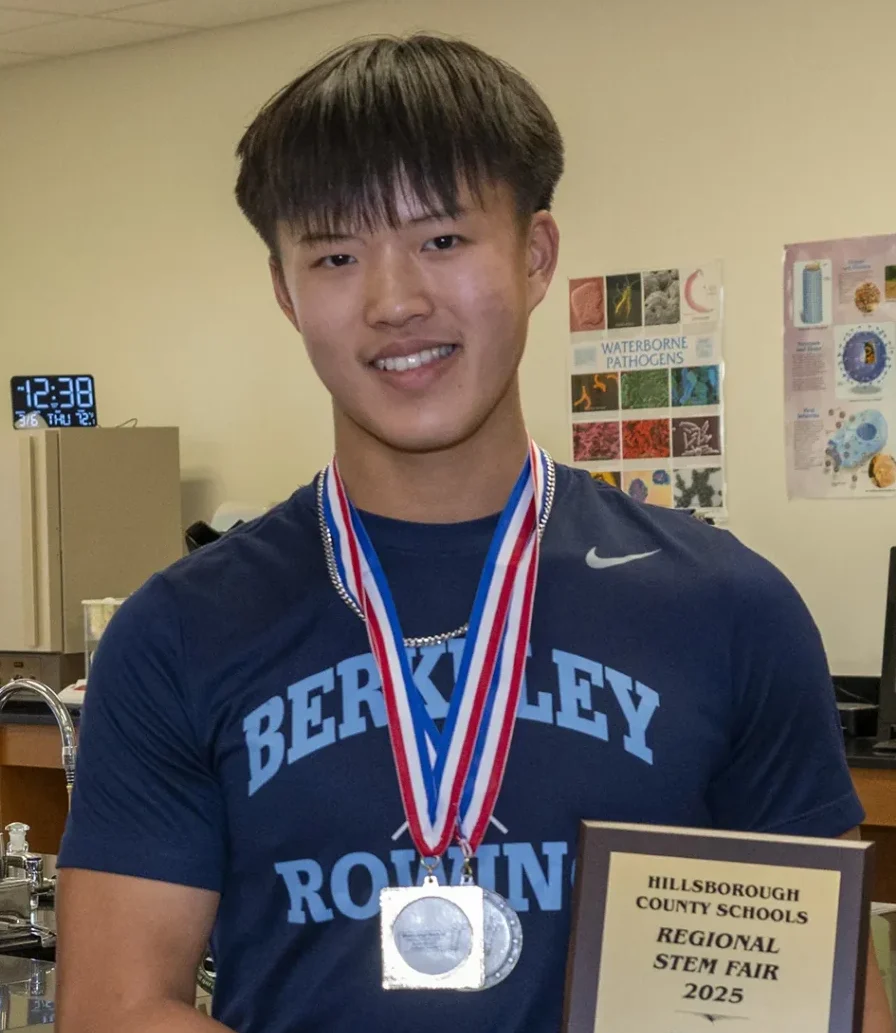
Chilok Mak ’27
Simplifying Scientific Research

Nate Watson ’15 and Jared Watson ’21
Brothers Jared Watson ’21 and Nate Watson ’15 say their business, Cure AI, is a game changer for helping researchers navigate scientific literature. The idea came about when Nate, as a student at Harvard Medical School, realized how time consuming and frustrating it is to dig through research papers. Cure AI simplifies that process, allowing users to explain what they’re looking for in plain language and quickly find relevant, peer-reviewed studies. Jared says, “In short, Cure AI is here to make research faster, more transparent, and easier to manage.”
Jared emphasizes that transparency is especially important to the Cure AI team, since many AI tools often lack it. He says, “Researchers often don’t know how an AI arrived at its answer, which can make it hard to trust. Cure AI eliminates that ‘black box’ feeling by showing exactly which studies were used and why, so users can feel confident in the results.” They have even received a patent for their approach to eliminating “hallucinations,” where AI systems present false information as true.
Jared says the Cure AI team is continuing to refine their platform—for example, he’s working with lab heads at Emory University (where he studied computer science) to understand how Cure AI may fit into their workflows and address their needs. He says, “In the future, we envision Cure AI as a one-stop platform where users can manage, discover, and interact with scientific literature—all while saving time and staying organized.”
From Shopping to Security
Alli Iglehart Kaden ’10 says she was drawn to the AI field because of its potential to solve complex problems at scale and create more intuitive, helpful experiences. She recently joined ReliaQuest, a cybersecurity company based in Tampa, where she will focus on building AI products that automate workflows for its security operations platform. Before that, she spent four and a half years at Amazon as a product manager. “My focus was building products that utilize various AI technologies to help customers more conveniently research and discover products,” she says. “I’ve really enjoyed building products that harness the power of AI to improve a customer’s shopping journey, whether that is through tailoring product recommendations to a specific customer profile, quickly distilling vast amounts of product information, or streamlining past purchase experiences.”
At Amazon, Alli was part of the founding team that launched the company’s conversational shopping assistant, Rufus. Rufus is powered by a custom-built language learning model (LLM) that can make product comparisons and recommendations. One thing that sets Rufus apart is its ability to understand photos and videos: “This enables customers to add an image as additional context when asking Rufus a question and provides the ability to enrich Rufus’s answers with visual content, making the experience more helpful and intuitive,” says Alli. “Taking a product that utilized a rapidly changing, emerging technology from zero to launch really allowed me to hone my product intuition and grow as a product leader.”

Alli Iglehart Kaden ’10
Click here to explore how technology enhances learning across campus.